
SASSA Loans Online: How They Really Work in South Africa (2026)
SASSA loans online are small, unsecured loans offered by private lenders to people who receive a SASSA grant, not a product from SASSA itself. This guide explains how to apply through your cellphone, what SASSA loans for child grant recipients actually look like, and how to avoid the loan sharks who target grant holders.
Quick disclosure: Loan Lenders SA is an independent information site. We are not a lender, not SASSA, and not affiliated with any bank or government body. Nothing on this page is financial or legal advice. Always check a lender's certificate on the National Credit Regulator register before you apply.
What Are SASSA Loans, Really?
SASSA does not lend money. The agency pays grants such as the Older Persons Grant, Disability Grant, Child Support Grant and the SRD R370 grant. When people search for "SASSA loans," they usually mean a short-term loan from a bank or micro-lender that will approve someone whose only income is a grant.
These loans work like any other unsecured personal loan. The lender checks your ID, confirms your grant payment, does an affordability assessment, and then decides whether to lend to you and on what terms. If you want the full picture of how unsecured lending works in South Africa, our personal loans guide covers the process step by step.
Can You Get a SASSA Loan Online?
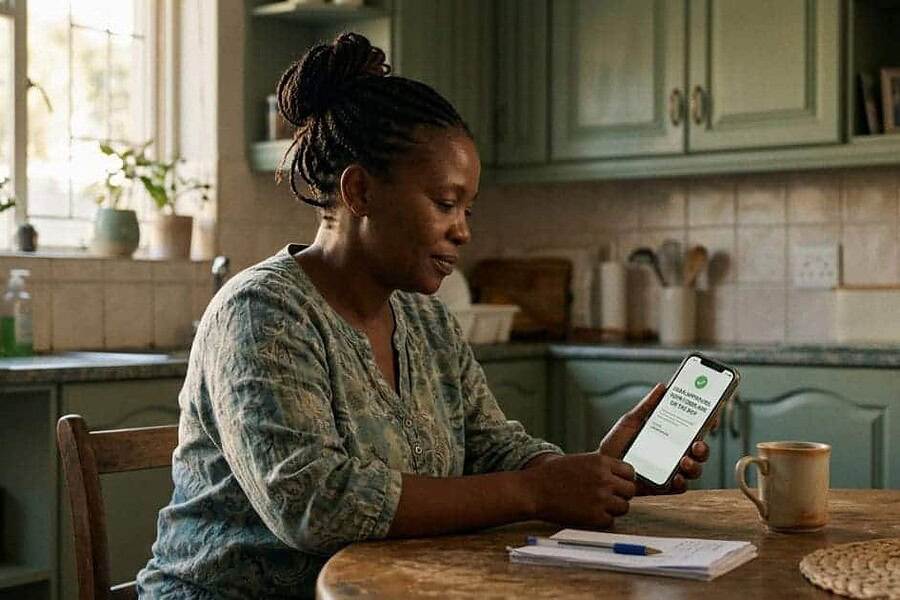
To apply for a SASSA loan online, you fill in an application form on the lender's website or app, upload your ID and a recent SASSA payment record, and wait for an affordability check. Approval usually takes minutes to a few hours for small amounts.
Online applications are convenient, but they carry a risk: it is easier for a fake "lender" website to look legitimate online than in person. Before you enter your ID number anywhere, confirm the site belongs to a business listed on the NCR register, and never apply through a link sent in an unsolicited WhatsApp or SMS message.
- Check the lender's NCR registration number on ncr.org.za before applying
- Look for a physical address and landline number, not only a cellphone number
- Read the loan agreement in full before you accept, including the total repayment amount
If you want instant, small-value credit rather than a grant-based loan specifically, our instant cash loans page compares options for fast approval.
How to Apply for a SASSA Loan via Cellphone
Most South African micro-lenders built their SASSA loan process around basic feature phones, because many grant recipients do not have smartphones or airtime for data. A typical cellphone application looks like this:
- Dial the USSD code. Each registered lender has its own short code, listed on their official website. Never use a code sent to you by a stranger.
- Enter your ID number and cellphone number. This must match the number linked to your bank or SASSA payment method.
- Confirm your SASSA grant type and amount so the lender can run an affordability check against your real income.
- Review the loan offer by SMS. This must show the loan amount, the interest rate, all fees, and the total amount you will repay.
- Accept or decline. You are never obligated to accept an offer, and a genuine lender will not pressure you to.
A code alone never gets you a loan
Searches for a "code for SASSA loan" often lead to scam pages promising instant approval for a fee. No legitimate lender charges you money upfront to dial a code or receive an approval message. If you are asked to pay before you receive funds, stop the process immediately.
SASSA Loans for Child Grant Recipients
Searches for "SASSA loans for child grant online apply" are common, but the honest answer is that most NCR-registered lenders need R1,000 to R2,000 or more in monthly income before they will approve any credit. The Child Support Grant on its own rarely meets that threshold.
| Grant type | Monthly amount (from April 2026) | Likely to qualify for a small loan? |
|---|---|---|
| Child Support Grant | R580 per child | Unlikely alone; needs extra income |
| Foster Child Grant | R1,290 | Possible with some lenders |
| Disability Grant | R2,400 | Yes, with most registered lenders |
| Older Persons Grant (60–74) | R2,400 | Yes, with most registered lenders |
| Older Persons Grant (75+) | R2,420 | Yes, with most registered lenders |
| SRD R370 Grant | R370 | Rarely qualifies alone |
If someone offers you an instant loan against the Child Support Grant with no income check, treat that as a red flag rather than good news. Genuine lenders are legally required to assess affordability under the National Credit Act, even for small amounts. For a wider look at what counts as manageable borrowing for a household, see our guide to good debt vs bad debt.
SASSA Cash Advance: What It Really Means
People searching "SASSA advance" or "how to borrow money from SASSA" are usually looking for cash to cover a gap before payday. In practice, this means a short-term loan from a registered credit provider, repaid in one lump sum or a few instalments once your next grant lands.
Check your exact payment date before applying for any short-term credit, so you know precisely when the loan will be deducted or repaid. Our SASSA payment dates page is updated monthly with the schedule for each grant type.
Is It Legal to Use Your SASSA Grant as Loan Security?
Your grant income can be used as proof of income when a lender assesses whether you can afford to repay a loan. That is legal. What is illegal is a lender holding your physical SASSA card, taking your PIN, or requiring you to hand over your ID as a form of collateral.
- A lender may ask to see your SASSA payment history as proof of income
- A lender may never keep your SASSA card, bank card, PIN or ID book
- A lender may never threaten to report you to SASSA to stop your grant
If this has already happened to you, report your card as lost through SASSA or your bank immediately to have it cancelled, then lay a case with SAPS and file a complaint with the National Credit Regulator. If unmanageable debt is the bigger issue, our page on getting out of debt review explains the formal process for resetting your credit position.
Last updated: 17 August 2026NCR-Registered Lenders vs Loan Sharks
| Sign | Registered lender | Loan shark / mashonisa |
|---|---|---|
| NCR registration | Listed, checkable at ncr.org.za | Not registered |
| Written agreement | Always provided | Rarely, or verbal only |
| Asks for your SASSA card | Never | Often |
| Interest rate | Capped under the NCA | Often 100%+ per year |
| Collection method | Formal, via debit order or invoice | Threats, card retention, intimidation |
You can verify any lender in under two minutes on the NCR's public register. If a business will not give you their NCR registration number, treat that as a decline, not a delay.
Compare NCR-registered personal loan optionsCapitec, Moneyline and Other Named Lenders
Several banks and lenders come up often in SASSA loan searches, including Capitec and Moneyline. Neither markets a product specifically branded as a "SASSA loan." What actually happens is this: if your grant is paid into an account with that bank, or you qualify under that lender's normal criteria, you apply for their standard personal loan and your grant is treated as income during the affordability check.
Be cautious of third-party pages claiming to be an "online application" for a named bank's SASSA loan. Always apply directly through the bank's own website or app, not through a third-party form that asks for your banking PIN or SASSA card number.
Net1 and its EasyPay subsidiary are a useful case study here. During the years Net1's Cash Paymaster Services (CPS) handled SASSA payments, deductions for loans and airtime were taken directly off beneficiaries' grants, which the courts later found unlawful. Our Net1 SASSA loans page covers what happened and why it still shapes the rules lenders must follow today.
What SASSA Loan Interest Rates and Repayments Look Like
For example, a R2,000 loan against an Older Persons or Disability grant of R2,400, repaid over 6 to 12 months, could carry a monthly instalment of roughly R200 to R280, once interest, an initiation fee and a monthly service fee are added. The exact figure depends entirely on the lender and the loan term, so always ask for the total cost in Rand, not just the interest percentage.
Before signing, work out whether the instalment still leaves you enough of your grant to cover food, transport and electricity for the month. A loan that looks affordable on paper can still leave a household short if the repayment is too close to the full grant amount.
Common SASSA Loan Scams to Watch For
- Card retention: someone offers a loan in exchange for keeping your SASSA card until it is "paid off"
- Upfront fee scams: you are asked to pay an "activation" or "processing" fee before receiving any loan
- Fake USSD codes: shared on WhatsApp or Facebook, leading to a premium-rate number or a phishing page
- Threats to report you to SASSA: an illegal lender claims they can stop your grant if you don't pay, which they cannot do
- EasyPay or unofficial card switches: being pressured to move off your official SASSA payment method to an unrecognised card, the same pattern behind the Net1 SASSA loans deductions controversy
Learn how the official channel works on our SASSA SRD grant application guide, and confirm your identity was verified correctly using our SASSA biometric verification explainer, since fraud often starts with a fake verification step.
Better Alternatives to a SASSA Loan
Before borrowing against a grant, it is worth weighing up whether you actually need a loan or a repayment plan on an existing account. If several debts are already stretching your budget, formal debt review can consolidate repayments into one affordable amount under legal protection, rather than adding another loan on top.
- Ask your municipality or service provider about a payment arrangement before it becomes overdue debt
- Compare NCR-registered lenders through our personal loans comparison rather than the first WhatsApp offer you receive
- Speak to a registered debt counsellor if you are juggling more than one repayment already
Frequently Asked Questions About SASSA Loans in South Africa
Yes, but no registered lender offers a product literally called a "SASSA loan." What you can get online is a small unsecured personal loan, where your SASSA payment counts as proof of income. You still complete the lender's normal online application, and they still run an affordability check before approving anything.
Dial the lender's USSD code or open their app, enter your ID number and SASSA payment details, and submit the application. Registered lenders send a written offer by SMS or email showing the amount, interest rate and total repayment before any money moves, as required by the National Credit Act.
No. It is a criminal offence under the Social Assistance Act of 2004 for anyone to keep your SASSA card, PIN, bank card or ID as security for a loan. If a lender asks for your card, do not hand it over, and report them to SASSA on 0800 60 10 11.
It is very hard. The Child Support Grant is R580 a month from April 2026, and most NCR-registered lenders need a minimum monthly income well above that before they will approve any credit. Anyone offering instant loans against the child grant alone is almost always operating illegally.
A SASSA cash advance is marketing language for a short-term loan paid out before your next grant date. SASSA itself does not offer advances. Any "advance" comes from a private lender and must still go through a normal affordability check under the National Credit Act.
Capitec does not have a product marketed as a "SASSA loan." If your grant is paid into a Capitec account, you can apply for Capitec's standard personal loan, and your grant income is assessed like any other income during approval.
Moneyline is one of several NCR-registered short-term lenders that some grant recipients use. As with any lender, confirm its registration number on the NCR website and read the full loan agreement before accepting an offer, since terms and fees vary between providers.
It depends on the grant amount and the lender's own affordability rules, not a fixed government limit. Small loans against an Older Persons or Disability grant of R2,400 typically range from about R500 to R3,000, repaid over a few months.
You typically need your South African ID, proof of your SASSA payment such as a bank or SASSA card statement, and proof of address. Some lenders also verify the cellphone number linked to your grant payment during the application.
Most credit providers will not accept the R370 SRD grant on its own as sufficient income for a loan or phone contract, because it sits below their minimum income threshold. A few micro-lenders may consider it alongside other income, but approval on the SRD amount alone is unlikely.
A registered lender follows the same process as any missed payment: late fees within NCA limits, a mark on your credit record, and possible legal action if it stays unresolved. They cannot legally cut off or seize your SASSA grant itself.
Report it to SASSA on 0800 60 10 11 to have your card blocked, lodge a complaint with the National Credit Regulator at ncr.org.za, and open a case at your nearest SAPS station, since holding a SASSA card as security is a criminal offence.
Often, yes. Grant income is treated as higher risk by many short-term lenders, so rates can sit closer to the maximum allowed under the National Credit Act. Always ask for the total repayment amount in Rand, not just the monthly interest rate, before you sign.
A registered lender is listed on the NCR database, provides a written agreement, and never asks for your SASSA card. A loan shark, often called a mashonisa, usually skips the paperwork, demands your card or PIN, and charges rates far above what the law allows.
Disclaimer: Loan Lenders SA is an independent information website. We are not a lender, credit provider, bank, or affiliated with SASSA or any government department. Content is provided for general information only and does not constitute financial or legal advice. Always confirm a lender's registration on the National Credit Regulator (NCR) website before entering any credit agreement, and never share your SASSA card, PIN, or banking PIN with any lender.